

Re-design for Frictionless Payment at Farmer's Market
A system's design approach that optimizes market payments and enhances stakeholder alignment, enabling the organization to focus on its mission-driven initiatives.
Role:
UX Researcher & Service Designer
Timeline:
Sep 2022- Nov 2022
Team:
Tanvi Kokate & 4 Others
Relevant Keywords:
Contextual Inquiry, Rapid Prototyping, Usability Testing
Primary Research Methods

Desk Research

Contextual Research

In-Depth Interviews

Observation
Context
Imagine strolling through a lively farmers' market, the smell of fresh produce in the air, live music in the background, and friendly vendors eager to share their goods. But just as you're ready to buy, confusion sets in—how do these tokens work? Now, picture the volunteers behind the scenes, painstakingly sorting hundreds of tokens by hand before the market even opens. Or the vendors, overwhelmed and frustrated as they struggle to figure out which tokens they can accept. What should be a seamless, joyful experience turns into frustration. Our mission? To simplify the payment process, so that everyone, from customers to vendors to organizers, can focus on what truly matters: connecting over good food and shared values.

Project Summary
The Challenges
Time-consuming token handling: Volunteers spend hours manually sorting tokens in stacks of 10 before each market day.
Confusion about token types: Vendors sometimes accept the wrong tokens, leading to errors.
Lack of market awareness & unclear token usage: Customers struggle to understand where specific tokens can be used due to restrictions.
Service Solution
Token Counting Cup: Cups with an open slot to remove extra tokens after a stack of 10, streamlining the stacking process
Token Stacking Tray: A tray with brackets allowing only stacks of 10 tokens
Token Sorting Colored Buckets: Multiple color-coded buckets with clear signage to help customers and vendors easily sort tokens.
Infographic Posters: Strategically placed posters explaining token types and usage along with raising market awareness.
The Impact
Token Sorting Colored Buckets: Made it easier for vendors to collect and organize tokens & Reduced sorting effort at the end of the market day.
Token Stacking & Counting: Reduced token counting time from 2 hours to just a few minutes. Improved efficiency for market organizers, making end-of-day bookkeeping smoother.
FFM & Token Posters: Raised awareness of the market’s programs and token system. Customers quickly understood which tokens to use, improving the overall shopping experience.
The Process!
1. Exploration
We began our exploratory research with identifying key stakeholders and mapping out the market’s ecosystem

2. Defining the problem
To further immerse ourselves into the system and experience the stakeholders closely, we conducted 40+ hours of contextual field research working alongside the Forsyth Farmer's Market (FFM) team on every Saturday


Being a silent observer made me feel like a detective, it was fun!!
We helped at the FFM booth in stacking tokens before the start of the market
While helping at the booth, we found that the biggest challenge was the discovery and handling of tokens, which then shaped the project’s scope

We then mapped out different token types and the programs they facilitated within the market ecosystem
Problem Statement
The Forsyth Farmers' Market token system is cumbersome, requiring employees to spend hours on manual sorting, leaving vendors uncertain about which tokens to accept, and causing confusion for customers on how to purchase and use them.
From there, during our market visits, we closely observed visitors and vendors at key touchpoints & noted moments of confusion or inefficiency in their interactions with the token system. Also, analyzed the competitors and similar farmer's markets to compare processes and identify best practices.


To gain deeper insights, we conducted an in-depth interview with an FFM manager and several informal interviews with visitors to uncover pain points and opportunities.


Key Research Insights
FFM needs to efficiently organize tokens during setup because doing so every week is redundant.
Customers need help discovering the token system because many FFM visitors are unaware of it.
Vendors need more clarity about which tokens they can take because sometimes they accept the wrong tokens.
FFM needs to efficiently count tokens because they need to pay all vendors the equal value of tokens they receive.
With the help of research insights we mapped our Root Cause Analysis using a fishbone structure and asked our "How Might We?" statements.


How might we help FFM and vendors to reduce the time and energy it takes to count tokens manually?

How might we increase awareness and understanding of the token system for all stakeholders?
3. Proposed Solutions
Token Counting Cups
1
The token counting cups count exactly 10 tokens and puke out any excess tokens from the slit saving over 3 hours of manual counting before every market day.


Token Stacking Tray
2
The tokens counted with the cup are stacked in the tray in groups of 10 each which are handed over to the customers thereby saving the effort of organizing the tokens


Color-Coded Token Sorting Buckets
3
FFM provides vendors with color-coded buckets at the market's start, reducing confusion about accepted tokens. Vendors use these buckets to organize tokens, streamlining the process and making it clear for customers to identify accepted tokens.


Infographic Posters
4
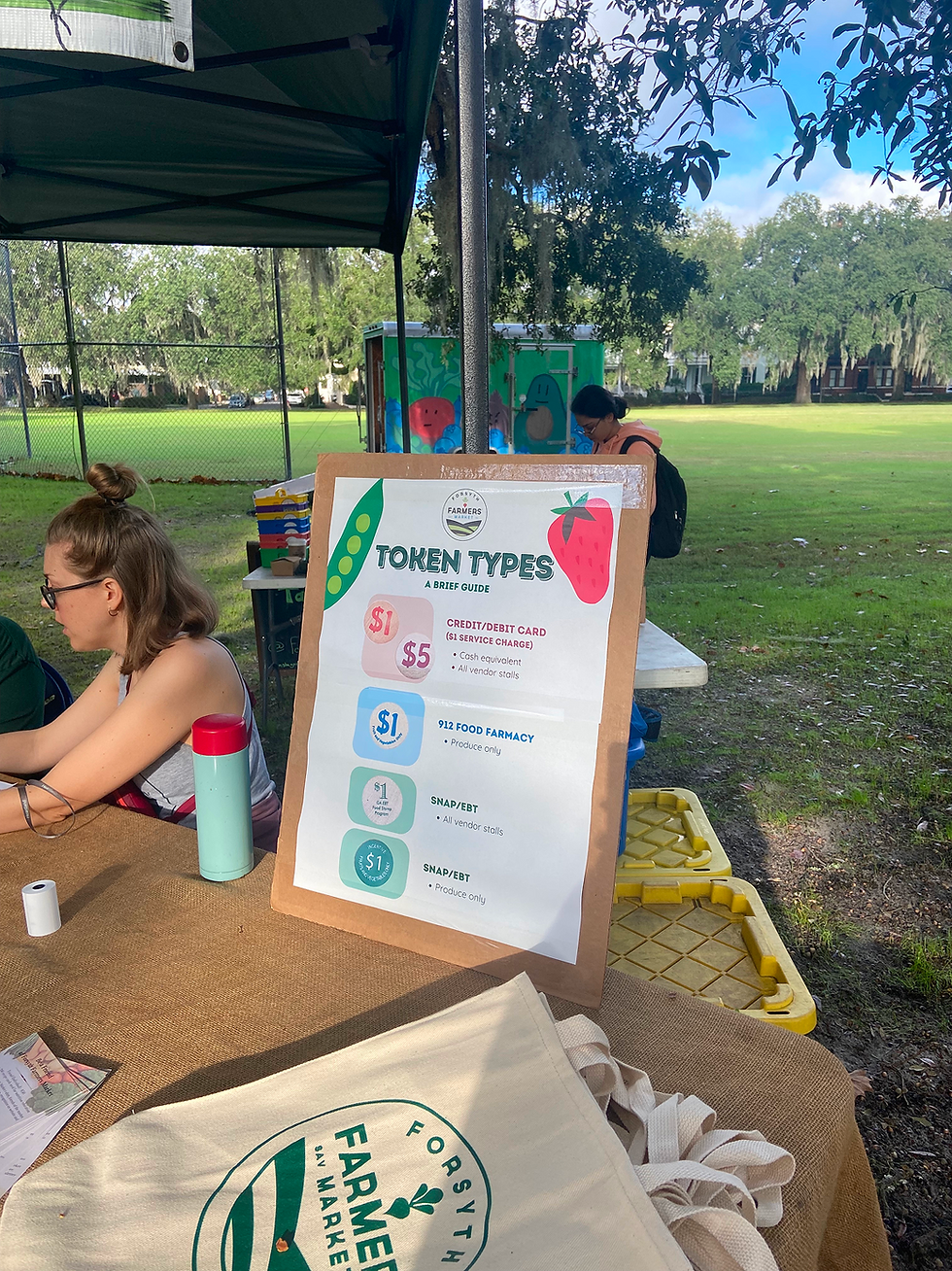
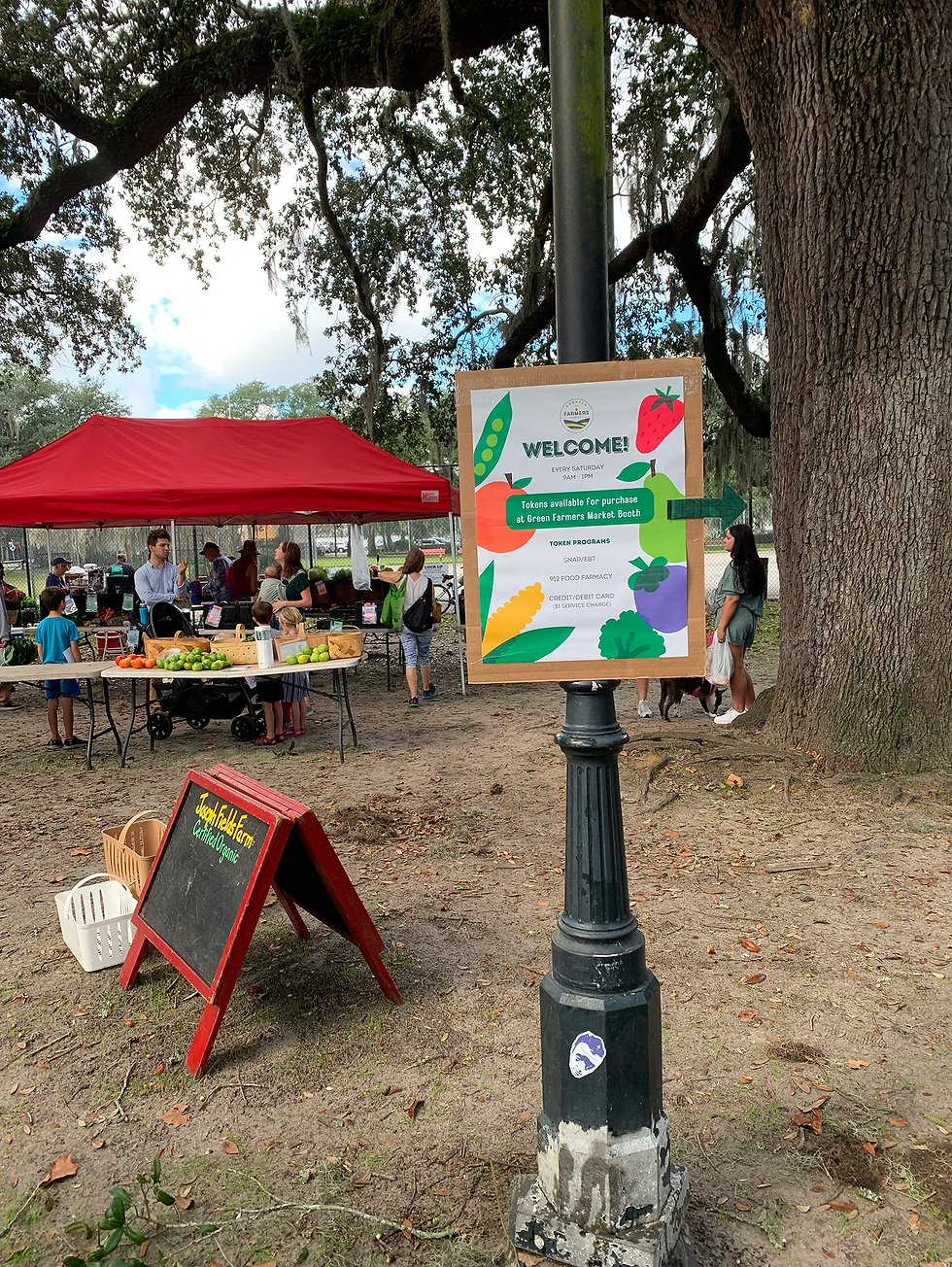
We designed posters to help customers discover the token system and lead them to the FFM booth. An infographic poster was also placed at the FFM both which explained all the different types of tokens so customers know which ones they can use.

Customer receives a text for refill and is asked for their desired pickup location
1
4. The Impact
1. Token Counting & Stacking
We made a counting cup and tray that turned a difficult job of counting and stacking tokens from 2 hours into an easy task that now takes just a few minutes. At the end of the market day, vendors found our solution handy, stacking 10 tokens in the tray effortlessly. We watched how people used it and saw that our counting cup, which we double-checked manually, counted tokens accurately with smooth movements. This made the whole process much easier for everyone involved.


2. Color-Coded Sorting Buckets
To make sure our sorting buckets worked well for everyone, we tried different combinations with three vendors based on the tokens they use. We noticed that vendors with only a few buckets found it easier, but those accepting all kinds of tokens needed more space and help carrying the buckets. While our solution did the job, we realized we could make the buckets more efficient by shaping them to do their job well without taking up too much space.
3. FFM/ Token Infographic Posters
We put up posters at the market entrance to guide people to the FFM Booth and help them understand the token system. The organizers told us the posters really worked—they made new visitors aware of the market. Another poster at the FFM Booth helped customers figure out which tokens to buy.

Finally, this is what the Forsyth Farmer's Market Future State Service Blueprint looks like...

Personal Takeaways
This project marked my transition from computer engineering into service design, offering invaluable lessons along the way.
-
Coming from a more technical background, I learned how to embrace different perspectives and work effectively with diverse teams.
-
This experience pushed me to step out of my comfort zone & confidently communicate my ideas and contribute meaningfully to discussions.
-
A supportive and respectful team environment fosters creativity and growth. I strive to practice kindness in collaboration, recognizing its positive impact on both teamwork and outcomes.
Beyond the project, the incredible vendors left a lasting impact. Their unique stories drew me back after the project completion—not as a designer, but as a friend, helping at their booths and embracing the community they set out to serve.
Behind the Scenes!


